You know the feeling.
The discharge papers are signed. The hospital room smells like industrial floor cleaner and stale coffee. Your loved one is finally in the wheelchair, blinking at the fluorescent lights like they’ve just emerged from a cave.
You are EXHAUSTED. Your brain is a bowl of lukewarm oatmeal. You just want to get them into the car, get home, and breathe something that hasn’t been filtered through a thousand HEPA vents.
But then you see it.
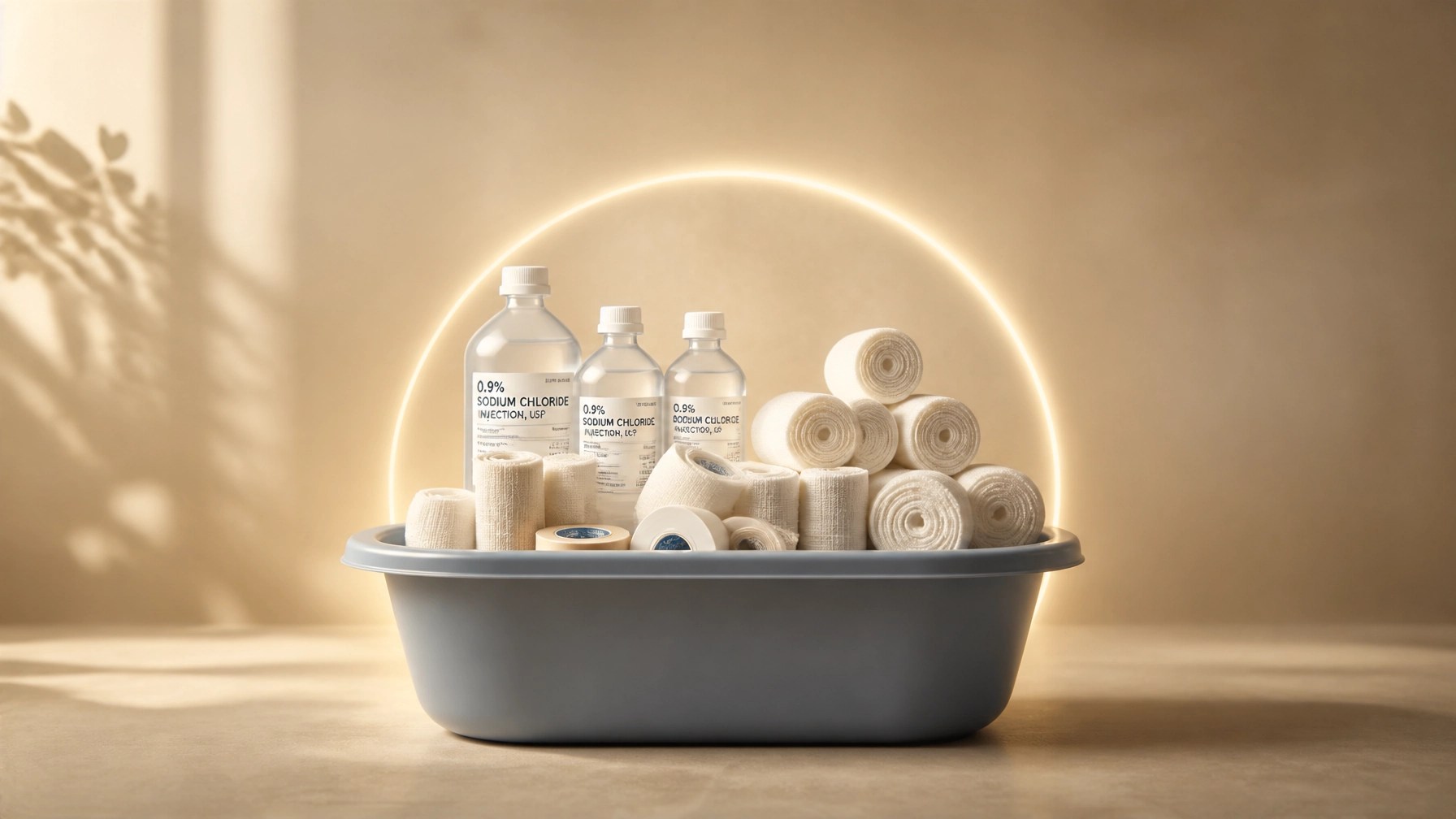
That little plastic nightstand. The one filled with half-used rolls of medical tape, a stack of gauze pads, a plastic wash basin, and those weird blue underpads we all call “chux.”
The nurse asks, “Do you want to take any of this with you?”
And because you’re a polite human being, and because you’re tired of carrying things, you say, “No, that’s okay. We have stuff at home.”
The Birth of the “Dammit” Moment
I have been there. I have said those exact words. And let me tell you, those are the words of a person who is about to have a 2:00 AM breakdown.
We call it the “Dammit” Moment.
It happens about twelve hours after you get home. The house is quiet. Your loved one is finally asleep. You go to change a dressing or clean up a spill, and you realize… you don’t have the right tape. Or the gauze you have at home is the wrong size. Or you’re out of those giant, absorbent pads that keep the mattress from becoming a casualty of war.
You stand there, in the middle of your kitchen, staring at the empty space where those supplies should be, and you whisper it:
“Dammit.“
Actually, if you’re like me, you probably say something a lot stronger than that.
You Already Paid for the Tape
Let’s get one thing straight, Samurai. This isn’t about being “cheap.” It isn’t about stealing from the hospital.
Listen to me: YOU ALREADY PAID FOR IT.
The second that nurse cracked the plastic seal on that basin or opened that pack of sterile sponges, it was billed to your insurance. It is part of the “room and board” or the “surgical supplies” line item that is currently making your deductible scream for mercy.
If you leave it there, they can’t give it to the next patient. It’s a health code violation. Do you know what happens to those perfectly good, half-used supplies?
THEY THROW THEM AWAY.
They toss them into the big red biohazard bin or the industrial trash. All that stuff you’re going to be driving to the 24-hour pharmacy to buy at a 300% markup tonight? It’s currently heading for a landfill.
TAKE THE SUPPLIES!!!
The Pride Trap
I know why we don’t do it. We want to feel like we’re “back to normal.” We want to leave the “sick” stuff at the hospital. We think I’m a capable adult. I can handle a trip to CVS.
But caregiving isn’t about being a “capable adult.” It’s about being a Samurai. And a Samurai does not go into battle without their gear just because they didn’t want to carry a plastic bag to the car.
Pride is a luxury we cannot afford.
When you’re a caregiver, your time is more valuable than gold. Your energy is a finite resource. If taking a stack of $0.50 sponges saves you a thirty-minute round trip to the store when you should be sleeping, then those sponges are worth their weight in diamonds.
The “Loot” List: What to Grab
Don’t just grab randomly. Be strategic. If you’re leaving the hospital in 2026, the tech has changed, but the biology hasn’t. People still leak. Wounds still need covering. Skin still gets dry.
Here is your Samurai Loot List. If it’s in the room and it’s been opened, it’s yours:
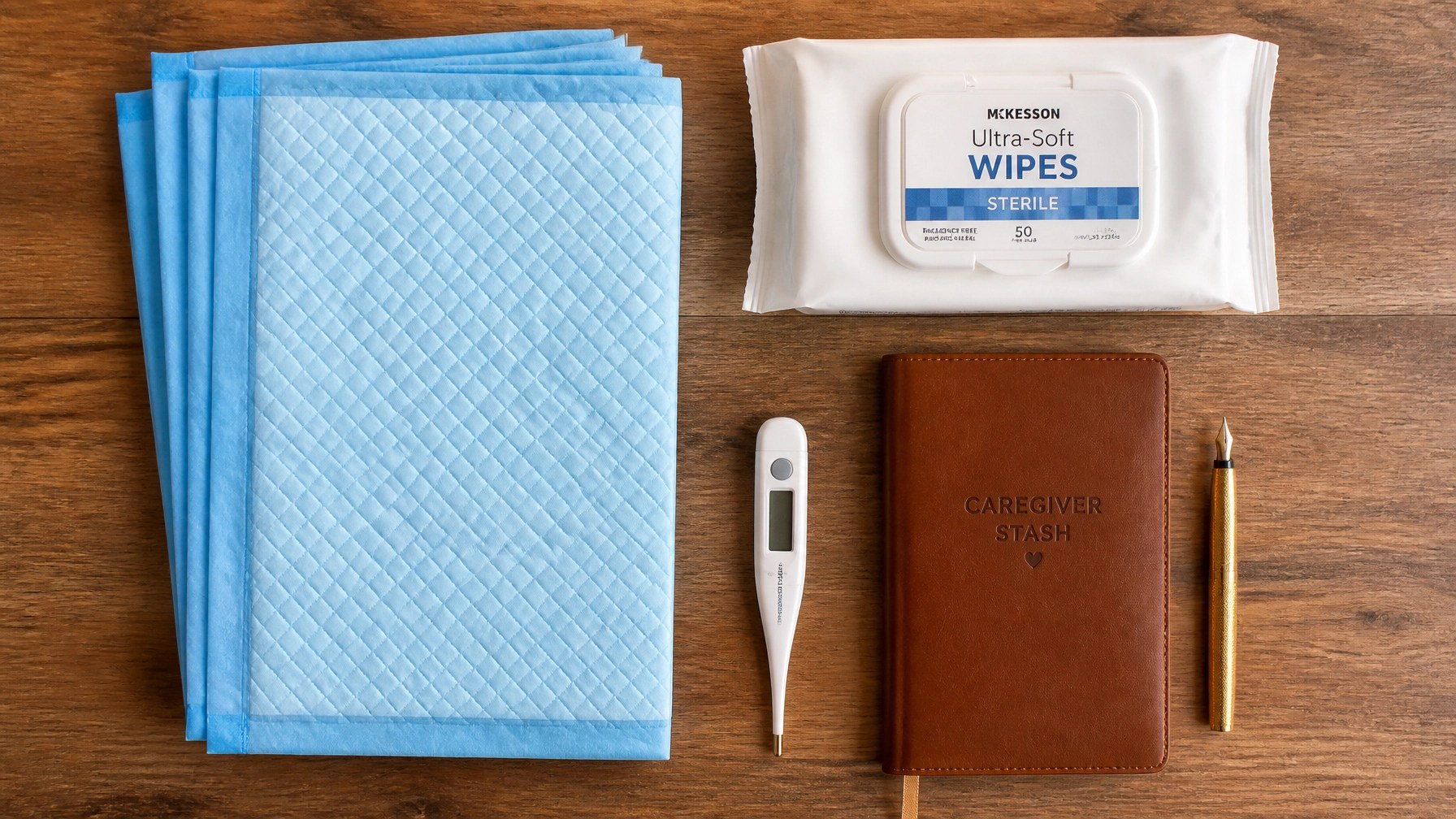
- The Blue Pads (Chux): These are the MVP of caregiving. They protect the bed, the car seat, the couch, and your sanity. Take every single one they give you.
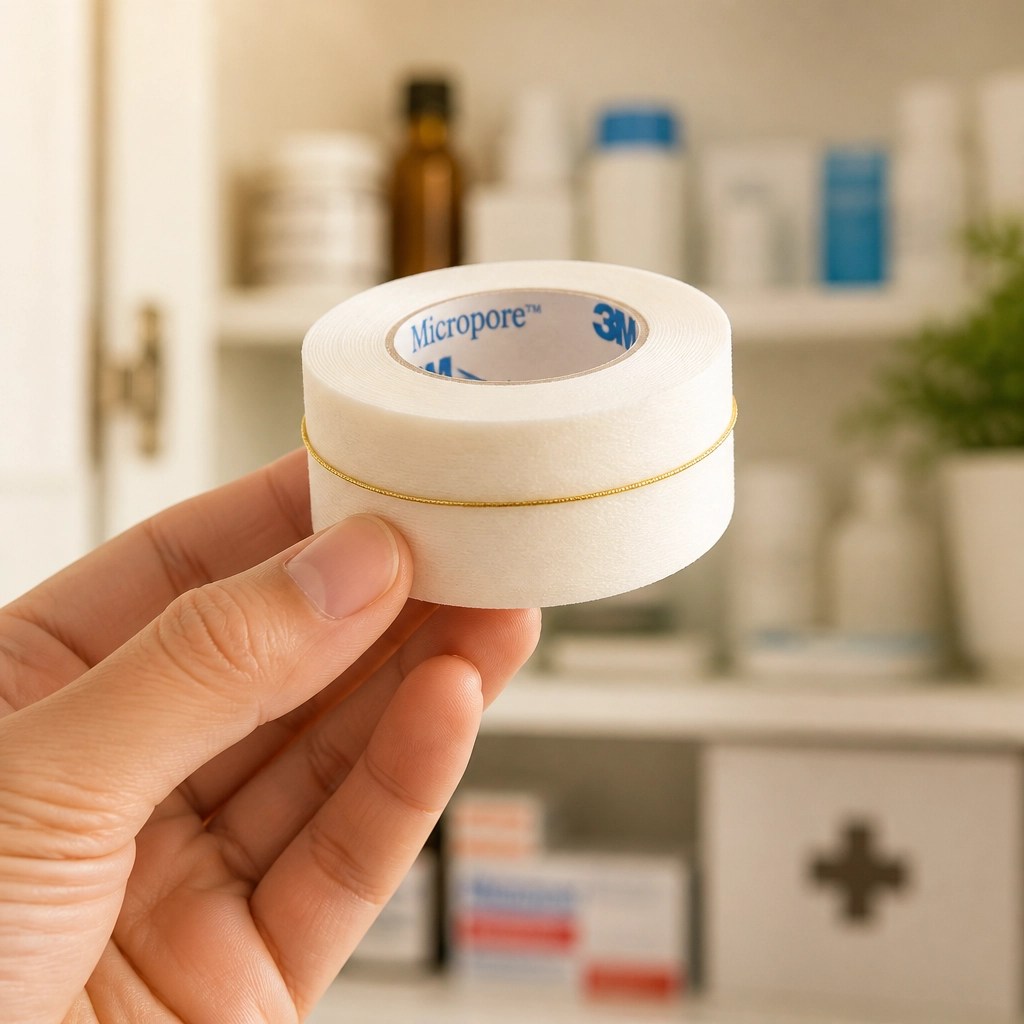
- The Paper Tape: Hospital tape is better than the stuff you buy in the “First Aid” aisle. It’s gentler on fragile skin. Grab the rolls.
- The Plastic Basin: You think you don’t need a basin until someone needs to soak a foot or throw up at 3:00 AM. It’s also a great “bucket” to carry all your other loot.
- Saline and Wipes: If they opened a bottle of sterile water or saline for wound care, take the rest of the bottle.
- The “Barf Bags”: Those little blue rings with the plastic bags attached? They are a miracle of engineering. Put one in the glove box of your car immediately.
- Surgical Sponges/Gauze: The big ones. The 4x4s. Take the whole stack.
The 2026 Reality: Privacy and Paperwork
While you’re busy grabbing the physical supplies, don’t forget the digital ones.
In this era of hyper-connectivity, we sometimes assume the “system” will talk to itself. We assume the primary care doctor will see what the hospital did.
SPOILER ALERT: They won’t. Or they will, but it’ll be three days late and missing the one piece of information you actually need.
Before you leave:
- Take a photo of the Medication Administration Record (MAR). Don’t just trust the discharge summary. See what they actually gave your loved one in the last 24 hours.
- Grab the physical discharge papers. Yes, they are in the “portal.” No, you won’t be able to log into the portal when your Wi-Fi is down, and you’re trying to explain a new symptom to a nurse on the phone.
- Protect the data. Those papers have Social Security numbers and private health info on them. Keep them in a dedicated folder. Don’t leave them sitting on the dashboard of your car for the world to see.
Training is a Supply, Too
The most important thing you can “take” from the hospital isn’t in a box. It’s the knowledge of how to use it.
Do not let them wheel you out of there until you have done the task yourself.
I don’t care how busy the nurse is. I don’t care if the transport guy is waiting. If you have to change a dressing at home, you need to change it in the hospital room with the nurse watching you first.
“I watched the video” is not the same as “I felt how sticky this tape is, and I know how to pull it off without tearing the skin.”
BE BOLD. Ask the questions. Demand the demonstration. That is part of the “supplies” you paid for.
The Peace of the Prepared
There is a specific kind of peace that comes from being prepared.
When you get home and you realize you have everything you need in that little grey plastic basin, you aren’t just a person taking care of a family member. You are a Samurai who has secured the perimeter.
You’ve avoided the “Dammit” Moment. You’ve saved yourself a trip to the store. You’ve reclaimed a tiny bit of control in a situation that feels completely out of control.
So, next time the nurse asks if you want the leftovers, look her in the eye and say:
“YES. PACK IT ALL UP.”
Because you’re a Samurai. And we don’t leave our gear behind.
Leave a Reply