Blog

  • Oh My Aching Back – No More!

    THAT SNAP!!!

    You know the one. You’re leaning over the bed, trying to pull your loved one up just two more inches so they don’t slide off the mattress. You’re mid-pull, holding your breath, and then you hear it.

    OR WORSE. YOU FEEL IT.

    A white-hot bolt of lightning shoots from your lower back down to your toes. You freeze. You can’t breathe. You’re stuck in a half-bent position, praying to a God you haven’t spoken to in weeks that you can just… stand… up… straight… again.

    I spent 18 years in the trenches caring for my mother. I know that snap. I know the dull, throbbing ache that becomes your constant companion. I know the way your body starts to feel like a rusted-out car that’s been driven 300,000 miles without an oil change.

    BUT HERE IS THE RAW TRUTH: YOU ARE NOT A FORKLIFT.

    You are a human being. And if you break, the whole operation shuts down.

    THE WEIGHT WE CARRY

    We talk about the “burden” of caregiving like it’s some abstract, emotional cloud. It isn’t. Sometimes the burden weighs exactly 155 pounds, and it’s dead weight in a bathtub.

    The physical toll of this life is staggering. Research shows that nearly 45% of us are dealing with moderate to high physical strain. ONE IN TEN OF US will actually see our own health go down the tubes because of the lifting, the transferring, and the sheer exhaustion of being “on” 24/7.

    WE ARE LIFTING HUMANS. Not boxes. Not groceries. Humans who might be confused, who might be stiff, or who might be “dead weight” because they can’t help us help them.

    It’s back-breaking labor. Literally.

    THE LIE(S) WE TELL OURSELVES

    “I can handle it.”

    “It’s just one quick move.”

    “I don’t have time to wait for help.”

    STOP IT!

    That lie is going to land you in a neck brace. I used to think I was a superhero. I thought my “Samurai” spirit meant I could override physics.

    SPOILER ALERT: Physics wins every single time.

    When you ignore the pain, you aren’t being “strong.” You’re being reckless. If you blow out a disc, who is going to change that bandage? Who is going to manage the meds? Who is going to be the advocate?

    YOUR BACK IS A CRITICAL PART OF THE INFRASTRUCTURE FOR THE ENTIRE CARE PLAN.

    BENDING WITHOUT BREAKING (THE MECHANICS)

    I’m not a doctor. I’m a caregiver who learned the hard way. But I’ve sat through enough physical therapy sessions to tell you what actually works.

    If you HAVE to lift, you have to do it like a pro:

    1.) USE YOUR DAMN LEGS. Your back is a bridge, not a crane. Bend your knees. Get low. Use those quad muscles. If your knees aren’t bending, your back is breaking.

    2.) NO TWISTING. NEVER. TWIST. If you need to turn while holding someone, move your feet. Pivot like you’re on a basketball court. If you twist your torso while carrying weight, you are inviting a herniated disc to dinner.

    3.) KEEP THEM CLOSE. The further the “load” is from your body, the heavier it is. Hug them. Get chest-to-chest if you have to. Keep their center of gravity close to yours.

    4.) WIDEN THE BASE. Feet shoulder-width apart. Give yourself a foundation. You aren’t a ballerina; you’re a stabilizer.

    But let’s be real: Sometimes “perfect form” isn’t enough. Sometimes the situation is just too heavy.

    TOOLS ARE NOT CHEATING

    There is no “Extra Credit” in caregiving for doing things the hard way.

    If you are struggling to move someone, YOU NEED TOOLS.

    1.) GAIT BELTS: Best ten bucks you’ll ever spend. It gives you something to grab onto that isn’t their arm or their waistband.

    2.) SLIDE SHEETS: Because friction is the enemy of your lower back.

    3.) HOYER LIFTS: If you’re at the point of “dead lifting” a human, you need a mechanical lift. Period.

    I know, I know. “The insurance won’t cover it.” “The house is too small.” “It takes too long to set up.”

    WOULD YOU RATHER SPEND THREE MINUTES SETTING UP A LIFT, OR THREE MONTHS FLAT ON YOUR BACK IN RECOVERY?

    Work with professionals. Ask for a Physical Therapy (PT) or Occupational Therapy (OT) evaluation. These people are wizards. They can look at your cramped, cluttered hallway and show YOU exactly how to navigate it without ending up in the ER.

    THE ART OF SITTING DOWN

    We are so busy running that we forget how to be still.

    Your back needs rest. Not “I’ll sleep when I’m dead” rest. Actual, intentional rest.

    When you get a five-minute break, don’t use it to scrub the baseboards. SIT. DOWN. Put your feet up. Let your spine decompress.

    We spend so much time worrying about the compliance of others: making sure the doctor’s orders are followed, making sure the records are in order, making sure the household runs like a Swiss watch.

    BUT ARE YOU COMPLIANT WITH YOUR OWN BODY’S NEEDS?

    If your body is screaming, listen to it. Pain is a data point. It’s a red-flag warning on your dashboard. Don’t put a piece of black tape over the light and keep driving.

    ASKING FOR THE SAVE

    I used to hate asking for help. I thought it meant I was failing my mother.

    TRUTH: Asking for help is a strategic management decision.

    If a task is too heavy, call in a neighbor. Hire a home health aide for two hours a day just for the bath and the transfers.

    You wouldn’t try to run a Fortune 500 company without a team, would you? Then why are you trying to run a high-acuity home care ward as a solo act?

    THE BOTTOM LINE

    My back still twinges sometimes. It’s a reminder of those 18 years. It’s a battle scar.

    But I want you to have fewer scars than I do.

    Protect your spine like it’s the most valuable asset in your organization: because it is. Without your physical health, the care ends.

    Be smart. Be loud about what you need. And for the love of all things holy, BEND YOUR KNEES.

    You’re doing the work of angels, but you’ve still got a human skeleton. Treat it with some respect.

    Stay strong, stay upright, and stop trying to be a forklift.

  • The Hole In The Room

    I finally did it. I moved the chair.

    For those of you who have been in the trenches of caregiving for years — and I mean the real trenches, where your living room looks more like a sub-acute hospital wing than a home — you know exactly which chair I’m talking about.

    It’s the command center. The cockpit. The place where she sat for eighteen years while we navigated the storms of aging, illness, and everything in between. It was the place where I handed her meds, where we watched endless loops of old movies, and where I checked her breathing at 3:00 AM just to be sure.

    And now, it’s gone.

    And let me tell you, the hole it left behind is LOUD.

    THE GUILT OF THE EMPTY SPACE

    When my mom passed, I thought I’d want that chair gone immediately. I thought I’d be tripping over myself to reclaim my square footage. But for months, I just… looked at it. It sat there like a silent monument to a job that was over, but a heart that wasn’t ready to punch out.

    Every time I thought about moving it, I felt like a traitor. Like I was evicting her memory from the house. Like if I took away the place where she was, then she really, truly wouldn’t be here anymore.

    DO NOT GET IT TWISTED: Moving her belongings isn’t an act of erasure. It’s an act of survival.

    But man, does it feel like betrayal at first. You walk past that empty corner, and your brain does this cruel little glitch where it expects to see a head resting against the pillow, or a hand reaching for a water glass. When you see nothing but wall and carpet, it hits you all over again.

    THE DUST BUNNIES AND THE TRUTH

    When I finally summoned the strength to drag that hunk of furniture out of the room, I found exactly what I expected: the “Hole In The Room.”

    You know the one. It’s that rectangular indentation in the carpet that refuses to fluff back up. It’s the collection of dust bunnies that have been congregating in peace for a decade. It’s the physical map of where life stood still while the rest of the world kept spinning.

    I stood there with a vacuum cleaner in one hand and a handful of tissues in the other, and I realized something: The hole in the carpet isn’t the problem.

    THE HOLE IS IN MY LIFE.

    For eighteen years, my schedule was built around that chair. My identity was “The Caregiver in the Room.” Without the chair, and without the person in it, I didn’t just have an empty corner — I had an empty ME.

    RECLAIMING YOUR CASTLE

    Caregivers, listen to me: YOU ARE ALLOWED TO WANT YOUR HOUSE BACK.

    We spend so much time turning our homes into facilities that we forget they were supposed to be our sanctuaries. We live with the hospital beds, the oxygen tanks, the walkers, and the commodes until we don’t even see them anymore. They become the wallpaper of our exhaustion.

    But once the caregiving ends, those items stop being “tools” and start being “triggers.”

    If looking at that recliner makes your chest tight every single time you walk into the kitchen, GET IT OUT. If the sight of the bedside table covered in pill organizers makes you want to scream, CLEAR IT OFF.

    It is not disrespectful to want a living room that looks like a living room again. It is an essential part of your healing process.

    THE RITUAL OF LETTING GO

    I didn’t just toss the chair in a dumpster. (Though some days, I wanted to.)

    I sat in it one last time. I felt the fabric. I remembered the good days — the rare ones where we laughed until we cried over something stupid on the TV. I acknowledged the hard days — the ones where I sat on the floor next to that chair and cried because I didn’t think I could do it for one more hour.

    Then, I thanked the chair for doing its job. I thanked it for holding her when I couldn’t.

    AND THEN I CALLED THE JUNK REMOVAL GUYS.

    Because I needed to see the floor again. I needed to know that I could inhabit my own home without being haunted by the physical reminders of her decline.

    FILLING THE HOLE

    Once the chair was gone and the carpet was scrubbed, I didn’t leave it empty.

    I bought a plant. A big, leafy, stubborn thing that looks nothing like a medical device. I put a new lamp there — one with a soft, warm glow that makes the room feel like a library instead of a clinic.

    The hole is still there, in a way. I still look at that corner and think of her. But now, I’m not looking at a “throne of sickness.” I’m looking at a space I reclaimed for my own peace.

    If you’re sitting there today staring at a piece of furniture that hurts to look at but feels “wrong” to move… this is your permission slip.

    MOVE THE CHAIR.

    SCRUB THE CARPET.

    BUY THE PLANT.

    Your mom, your dad, your spouse — whoever you cared for — they wouldn’t want you living in a museum of their illness. They’d want you to breathe. They’d want you to have a seat where you can finally, FINALLY, just be yourself.

    WE ARE SAMURAI. We fight the hard battles, we do the dirty work, and we survive the aftermath.

    Now, go reclaim your room. You’ve earned it

    .

  • Nobody Told Me Caregiving Would Feel Like This

    Nobody ever sits you down and gives you the real truth about this life. When you first step into the role of a caregiver, people give you a lot of platitudes. They tell you that you are “doing a wonderful thing.” They call you a “saint.” They tell you that “God gives His toughest battles to His strongest soldiers.”

    But nobody tells you how it actually feels at 3:00 AM when you are cleaning up a mess for the third time, and your soul feels like it has been through a paper shredder.

    I cared for my mother for 18 years. I know the weight of that silence. I know the feeling of looking in the mirror and not recognizing the person staring back because your entire identity has been swallowed whole by medications, appointments, and insurance phone calls.

    We are all members of a club we never asked to join. And it is time we started talking about the reality of it, the raw, messy, beautiful, and absolutely exhausting reality.

    THE BONE-DEEP EXHAUSTION

    There is “tired,” and then there is “caregiver tired.”

    Caregiver tired isn’t something a nap can fix. It is a deep-seated, cellular exhaustion that settles into your bones. It comes from the hyper-vigilance, that state of being where you are always listening for a fall, always waiting for the next crisis, always braced for the phone to ring.

    We live in a constant state of RED ALERT.

    When you live like that for months or years, your brain changes. You start to forget simple things. You find yourself staring at the grocery store shelves, unable to remember why you are there. That isn’t “aging,” that is the mental load of carrying another human being’s life on your shoulders.

    It is okay to admit that you are TIRED OF BEING TIRED. You aren’t a machine. You are a human being doing the work of an entire medical team, and the weight of that is immense.

    THE SECRET RESENTMENT

    Let’s talk about the thing nobody wants to say out loud: the resentment.

    We feel it when our siblings call from three states away to give “advice,” but never offer to spend a weekend so we can sleep. We feel it when our friends stop calling because they know we can’t come out anyway. And sometimes, and this is the hardest one to admit, we feel it toward the person we are caring for.

    You might find yourself thinking, I didn’t sign up for this. My life is passing me by. Why is this all on me?

    Then comes the guilt. The crushing, suffocating guilt that makes you feel like a “bad” person for even having those thoughts.

    LISTEN TO ME: Those thoughts do not make you a bad person. They make you a person in a high-pressure situation. You can love someone with your whole heart and still be ANGRY that your life has been sidelined. Those two things can exist at the same time.

    At The Samurai Caregiver, we believe in naming those feelings. When you name them, they lose their power over you. You aren’t “bad.” You are just a Samurai in the middle of a very long battle.

    THE LONELINESS OF THE CROWD

    Caregiving is the loneliest “busy” job in the world.

    You can be in the same room as someone all day long and still feel completely isolated. Your world shrinks. It shrinks down to the size of a hospital bed, a pill organizer, and a living room.

    People who aren’t doing this don’t understand. They can’t. They don’t know the specific fear of a new symptom or the specific grief of watching someone you love disappear in pieces. When they say, “Let me know if you need anything,” we know they mean well, but we also know they have no idea what “anything” even looks like anymore.

    This is why we need each other. We need people who “get it” without us having to explain. If you are feeling isolated today, come find us on our Facebook community. You are not alone, even when it feels like the rest of the world has moved on without you.

    THE INVISIBLE WARRIOR

    People see the medications. They see the walkers. They see the physical work. But they don’t see the STRENGTH it takes to keep showing up when you have nothing left to give.

    They don’t see the way you advocate for your loved one when a doctor isn’t listening. They don’t see the way you manage the finances, the nutrition, the emotions, and the hygiene of another adult.

    You are a warrior. You are a Samurai.

    Being a Samurai doesn’t mean you are perfect. It doesn’t mean you never cry or never want to quit. It means you have the COURAGE to face the truth of your situation and keep moving forward. It means you find the dignity in the difficult moments.

    THE QUIET, WEIRD MOMENTS

    Amidst the chaos and the exhaustion, there are these tiny, unexpected moments that catch you off guard.

    Maybe it’s a flash of the “old” them in a joke they tell. Maybe it’s the way the light hits the room in the afternoon. Maybe it’s the silence after a long day when you realize you survived another one.

    These moments don’t “fix” the hard parts. They don’t make the resentment go away, or the exhaustion lift. But they are the gold that repairs the cracks in our lives. In Japan, it’s called Kintsugi, the art of repairing broken pottery with gold. The piece is stronger and more beautiful because it was broken.

    That is us. We are being repaired with gold every single day.

    WE SEE YOU

    If you are reading this and your eyes are welling up because someone finally said it, we see you.

    We see the sacrifice. We see the love. We see the anger. We see the 18 years, or the 8 months, or the 2 decades you have given.

    You don’t need another checklist. You don’t need a “self-care” tip that involves a bubble bath you don’t have time for. You need to know that what you are doing matters, and that the way you feel is VALID.

    You are doing enough. You ARE enough.

    Take a breath. Adjust your armor. We are right here with you.

  • Take the Damn Supplies (And Other Things I Learned the Hard Way)

    You know the feeling.

    The discharge papers are signed. The hospital room smells like industrial floor cleaner and stale coffee. Your loved one is finally in the wheelchair, blinking at the fluorescent lights like they’ve just emerged from a cave.

    You are EXHAUSTED. Your brain is a bowl of lukewarm oatmeal. You just want to get them into the car, get home, and breathe something that hasn’t been filtered through a thousand HEPA vents.

    But then you see it.

    That little plastic nightstand. The one filled with half-used rolls of medical tape, a stack of gauze pads, a plastic wash basin, and those weird blue underpads we all call “chux.”

    The nurse asks, “Do you want to take any of this with you?”

    And because you’re a polite human being, and because you’re tired of carrying things, you say, “No, that’s okay. We have stuff at home.”

    The Birth of the “Dammit” Moment

    I have been there. I have said those exact words. And let me tell you, those are the words of a person who is about to have a 2:00 AM breakdown.

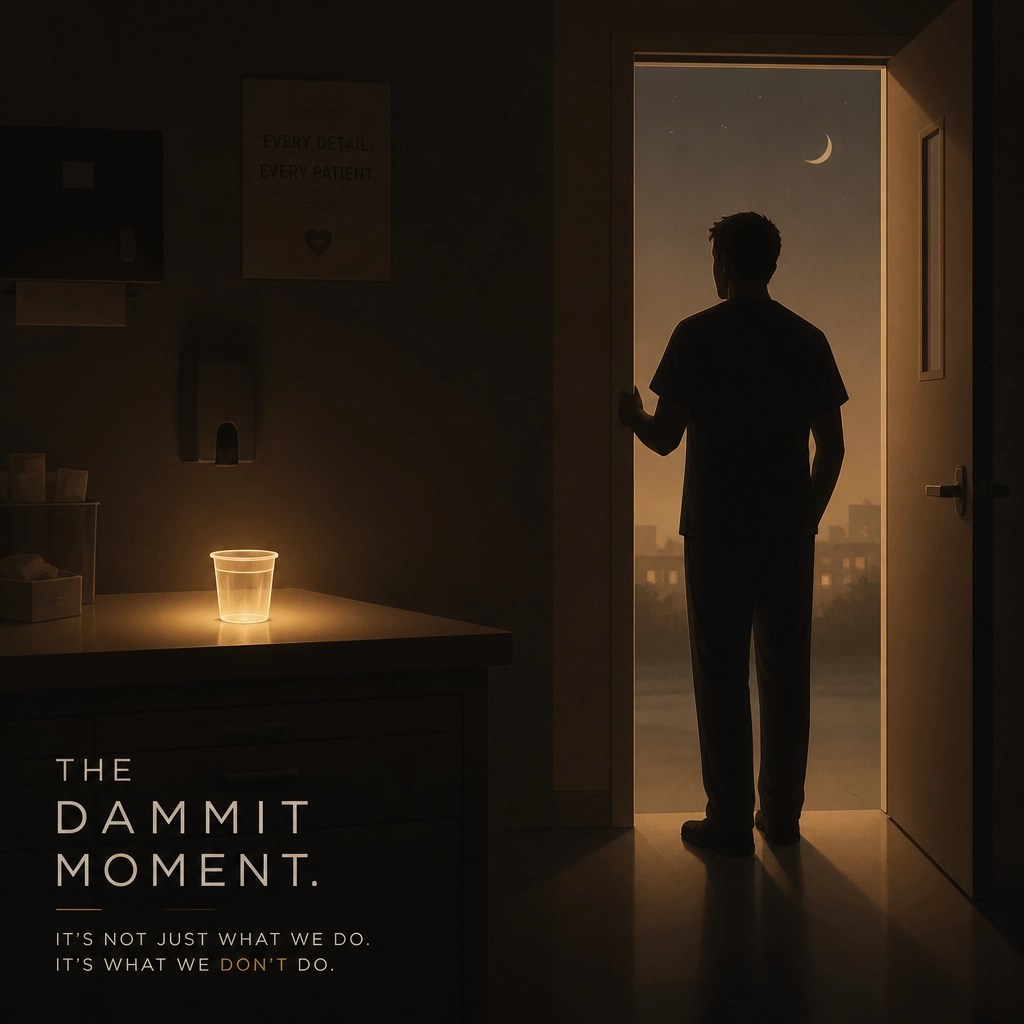
    We call it the “Dammit” Moment.

    It happens about twelve hours after you get home. The house is quiet. Your loved one is finally asleep. You go to change a dressing or clean up a spill, and you realize… you don’t have the right tape. Or the gauze you have at home is the wrong size. Or you’re out of those giant, absorbent pads that keep the mattress from becoming a casualty of war.

    You stand there, in the middle of your kitchen, staring at the empty space where those supplies should be, and you whisper it:

    Dammit.

    Actually, if you’re like me, you probably say something a lot stronger than that.

    You Already Paid for the Tape

    Let’s get one thing straight, Samurai. This isn’t about being “cheap.” It isn’t about stealing from the hospital.

    Listen to me: YOU ALREADY PAID FOR IT.

    The second that nurse cracked the plastic seal on that basin or opened that pack of sterile sponges, it was billed to your insurance. It is part of the “room and board” or the “surgical supplies” line item that is currently making your deductible scream for mercy.

    If you leave it there, they can’t give it to the next patient. It’s a health code violation. Do you know what happens to those perfectly good, half-used supplies?

    THEY THROW THEM AWAY.

    They toss them into the big red biohazard bin or the industrial trash. All that stuff you’re going to be driving to the 24-hour pharmacy to buy at a 300% markup tonight? It’s currently heading for a landfill.

    TAKE THE SUPPLIES!!!

    The Pride Trap

    I know why we don’t do it. We want to feel like we’re “back to normal.” We want to leave the “sick” stuff at the hospital. We think I’m a capable adult. I can handle a trip to CVS.

    But caregiving isn’t about being a “capable adult.” It’s about being a Samurai. And a Samurai does not go into battle without their gear just because they didn’t want to carry a plastic bag to the car.

    Pride is a luxury we cannot afford.

    When you’re a caregiver, your time is more valuable than gold. Your energy is a finite resource. If taking a stack of $0.50 sponges saves you a thirty-minute round trip to the store when you should be sleeping, then those sponges are worth their weight in diamonds.

    The “Loot” List: What to Grab

    Don’t just grab randomly. Be strategic. If you’re leaving the hospital in 2026, the tech has changed, but the biology hasn’t. People still leak. Wounds still need covering. Skin still gets dry.

    Here is your Samurai Loot List. If it’s in the room and it’s been opened, it’s yours:

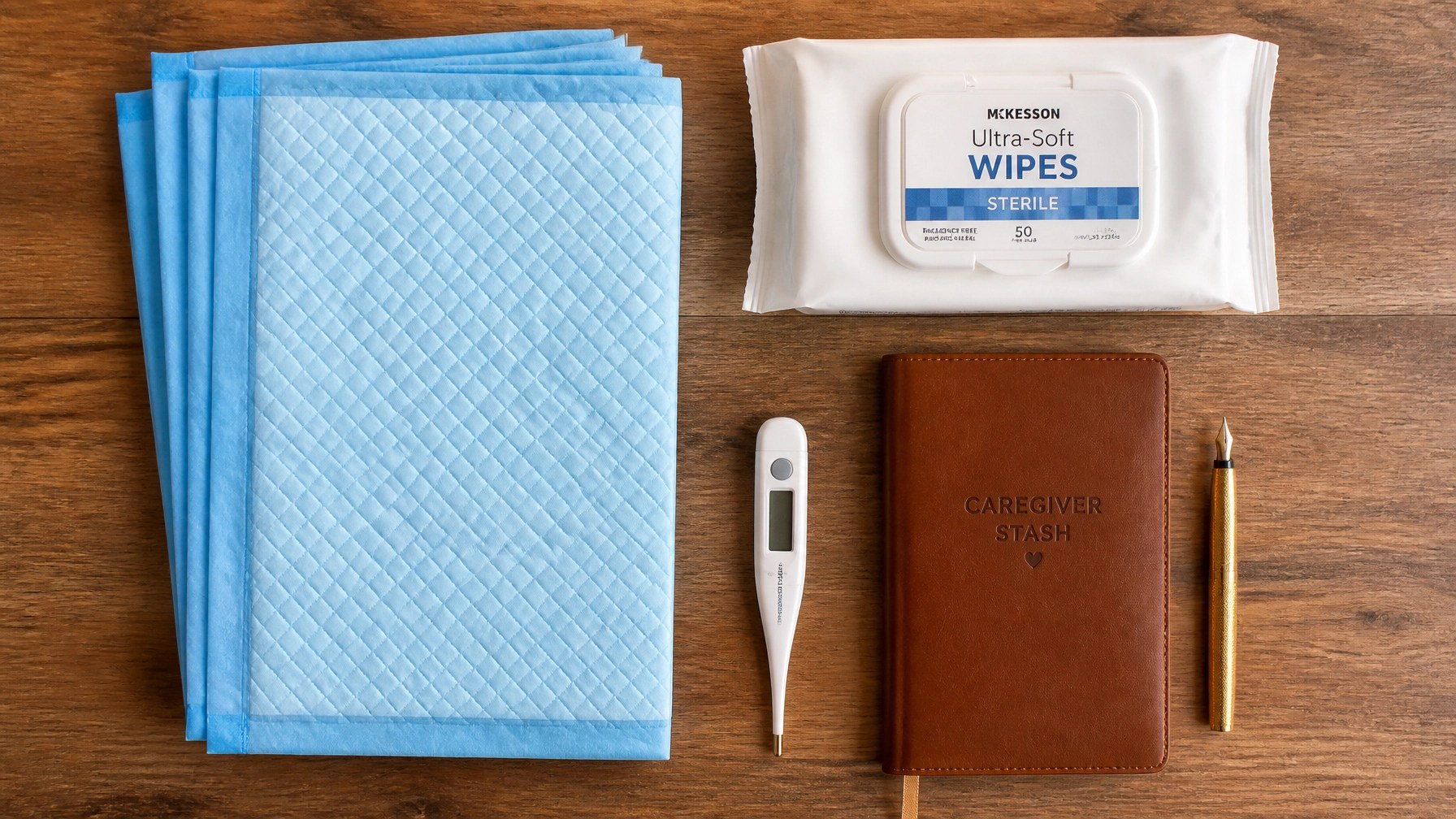
    1. The Blue Pads (Chux): These are the MVP of caregiving. They protect the bed, the car seat, the couch, and your sanity. Take every single one they give you.
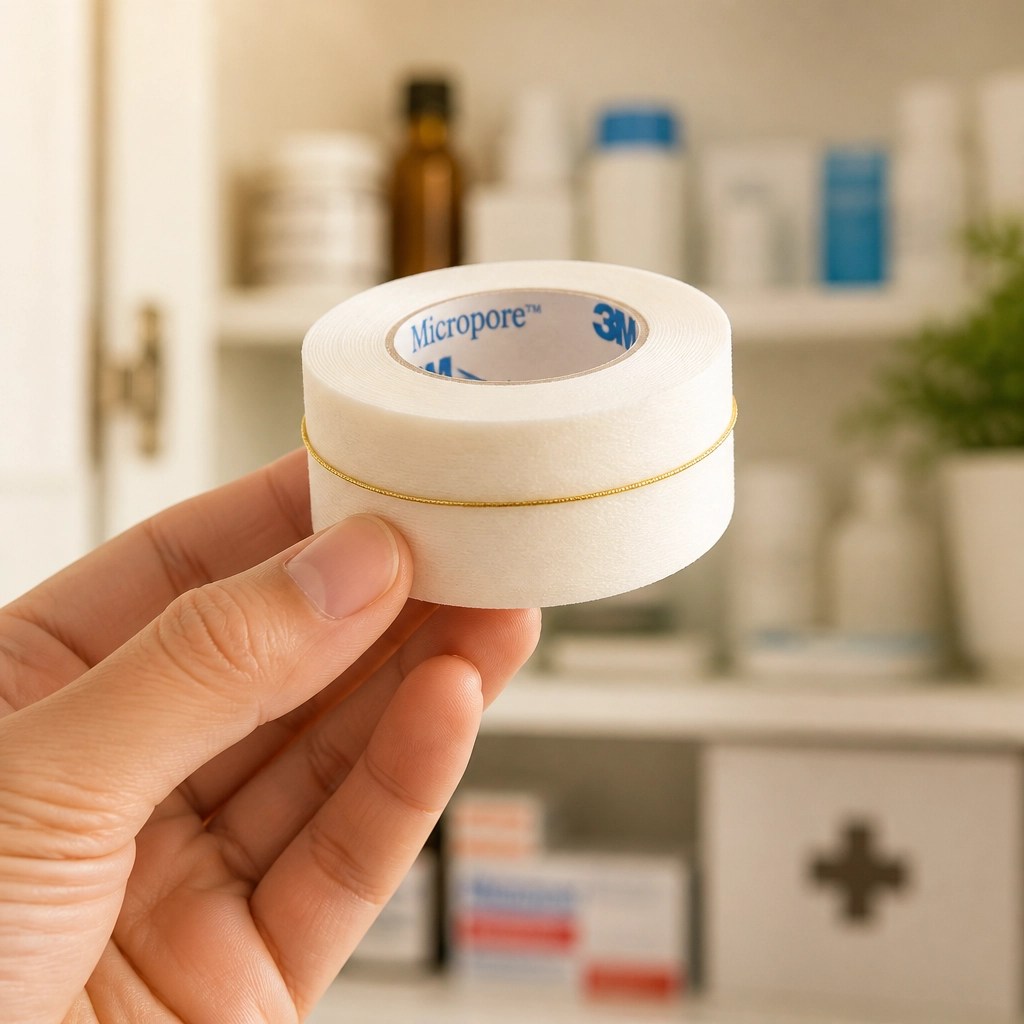
    2. The Paper Tape: Hospital tape is better than the stuff you buy in the “First Aid” aisle. It’s gentler on fragile skin. Grab the rolls.
    3. The Plastic Basin: You think you don’t need a basin until someone needs to soak a foot or throw up at 3:00 AM. It’s also a great “bucket” to carry all your other loot.
    4. Saline and Wipes: If they opened a bottle of sterile water or saline for wound care, take the rest of the bottle.
    5. The “Barf Bags”: Those little blue rings with the plastic bags attached? They are a miracle of engineering. Put one in the glove box of your car immediately.
    6. Surgical Sponges/Gauze: The big ones. The 4x4s. Take the whole stack.

    The 2026 Reality: Privacy and Paperwork

    While you’re busy grabbing the physical supplies, don’t forget the digital ones.

    In this era of hyper-connectivity, we sometimes assume the “system” will talk to itself. We assume the primary care doctor will see what the hospital did.

    SPOILER ALERT: They won’t. Or they will, but it’ll be three days late and missing the one piece of information you actually need.

    Before you leave:

    • Take a photo of the Medication Administration Record (MAR). Don’t just trust the discharge summary. See what they actually gave your loved one in the last 24 hours.
    • Grab the physical discharge papers. Yes, they are in the “portal.” No, you won’t be able to log into the portal when your Wi-Fi is down, and you’re trying to explain a new symptom to a nurse on the phone.
    • Protect the data. Those papers have Social Security numbers and private health info on them. Keep them in a dedicated folder. Don’t leave them sitting on the dashboard of your car for the world to see.

    Training is a Supply, Too

    The most important thing you can “take” from the hospital isn’t in a box. It’s the knowledge of how to use it.

    Do not let them wheel you out of there until you have done the task yourself.

    I don’t care how busy the nurse is. I don’t care if the transport guy is waiting. If you have to change a dressing at home, you need to change it in the hospital room with the nurse watching you first.

    “I watched the video” is not the same as “I felt how sticky this tape is, and I know how to pull it off without tearing the skin.”

    BE BOLD. Ask the questions. Demand the demonstration. That is part of the “supplies” you paid for.

    The Peace of the Prepared

    There is a specific kind of peace that comes from being prepared.

    When you get home and you realize you have everything you need in that little grey plastic basin, you aren’t just a person taking care of a family member. You are a Samurai who has secured the perimeter.

    You’ve avoided the “Dammit” Moment. You’ve saved yourself a trip to the store. You’ve reclaimed a tiny bit of control in a situation that feels completely out of control.

    So, next time the nurse asks if you want the leftovers, look her in the eye and say:

    “YES. PACK IT ALL UP.”

    Because you’re a Samurai. And we don’t leave our gear behind.